

Your brain is not a fixed machine with a set output level. It’s a dynamic, adaptable organ that responds to training the way a muscle responds to exercise. The capacity for hard, focused, sustained work is not something you either have or don’t have. It’s something you can deliberately develop.
The science of cognitive performance, neuroplasticity, and habit formation converges on a clear message: with the right training approach, you can dramatically increase your brain’s ability to do hard work, maintain focus, and resist distraction. Here’s how.
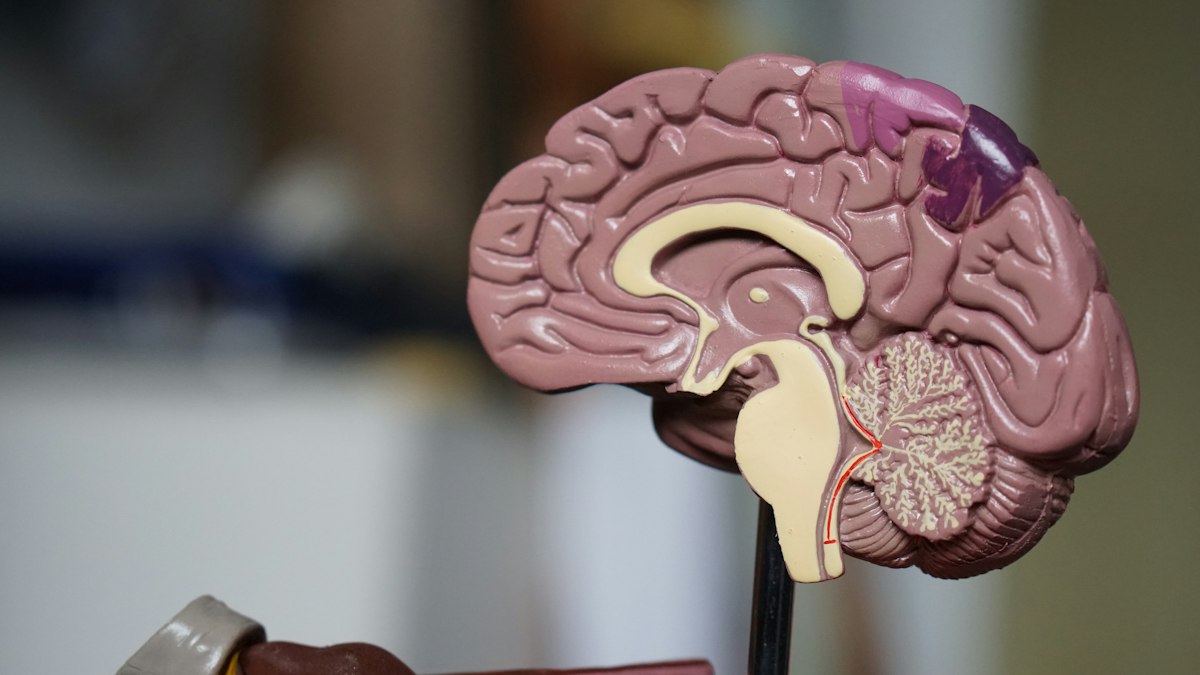
Understand How Your Brain Resists Hard Work
Before you can train your brain to work harder, it helps to understand why it resists in the first place. Your brain’s default mode is energy conservation. Thinking is metabolically expensive — the brain consumes roughly 20% of your body’s total energy despite being only 2% of your body weight. It has evolved to minimize unnecessary cognitive effort.
This is why hard mental work feels effortful and why your brain gravitates toward easier, more stimulating alternatives (social media, entertainment, snacking). It’s not moral weakness — it’s your brain doing exactly what it evolved to do. Training your brain to work harder means working against this default setting, not judging yourself for having it.
Progressive Overload for the Mind
The most effective way to build any capability is progressive overload — gradually increasing the challenge over time so the system continuously adapts. This works for building physical strength, and it works exactly the same way for building cognitive endurance.
Start with honest assessment of your current capacity. How long can you genuinely maintain focused, uninterrupted work before your concentration breaks? For many people, it’s 15-20 minutes. That’s your starting point — not a judgment, just a baseline.
Then apply progressive overload. Work at the edge of your current capacity, then gradually extend it. If you can currently focus for 20 minutes, practice focusing for 25 minutes. Once that becomes comfortable, extend to 30. Over months, you can build capacity for 90-minute deep work sessions that would have felt impossible at the start.

Protect Your Deep Work Windows
Cal Newport’s concept of “deep work” — cognitively demanding tasks performed in a state of distraction-free concentration — is the highest-value activity most knowledge workers can engage in. It’s also increasingly rare in a world of constant notifications, open offices, and always-on communication.
Training your brain to work harder requires protecting windows of time specifically for deep, undistracted work. This means phone away (not just silent — away), browser tabs closed, notifications off, door shut. The goal is to eliminate the option of distraction during these windows, not to resist it through willpower.
Start with one 60-90 minute deep work session per day. Protect it aggressively. Over time, as your brain adapts to the demands of sustained focus, you can increase the length and frequency.
Build a Pre-Work Ritual
Elite performers in every field use pre-performance rituals to signal their brain that it’s time to shift into a focused state. Athletes have warm-up routines. Musicians have preparation rituals. Knowledge workers can do the same.
A pre-work ritual is a consistent sequence of behaviors that precede your work session and train your brain to associate those behaviors with a shift into focused mode. It might be making a specific type of tea, doing five minutes of meditation, reviewing your intention for the session, and putting on instrumental music.
After enough repetitions, the ritual itself begins to trigger the focused state automatically — a conditioned response that makes getting into deep work faster and more reliable.
Train Concentration Like a Muscle
Meditation, specifically focused attention meditation, is one of the most direct ways to train the concentration capacity you need for hard work. The practice is simple: focus your attention on a single object (usually the breath), notice when your attention wanders, and gently redirect it back. Repeat thousands of times.
This is literally the same cognitive process required for focused work: sustain attention, notice distraction, redirect back to the task. Regular meditation practice builds the neural pathways and executive function capacity that underlie both activities.
Even 10 minutes of daily focused attention meditation, practiced consistently over months, produces measurable improvements in attention, working memory, and cognitive control.

Manage Your Cognitive Energy
Cognitive performance is not constant throughout the day. Most people have a peak performance window — a time when their prefrontal cortex is most active and their ability for complex thinking is highest. For most people, this window is in the morning, roughly 1-4 hours after waking.
Protecting this peak window for your most cognitively demanding work — and using lower-energy periods for routine tasks — dramatically amplifies your effective working capacity. You’re not working harder; you’re working at the right time.
Similarly, adequate sleep is non-negotiable for cognitive performance. Sleep deprivation impairs executive function, working memory, creativity, and emotional regulation — all of the capabilities required for hard work. No amount of motivation or discipline compensates for a chronically sleep-deprived brain.
Use Difficulty as a Growth Signal
Perhaps the most important mindset shift for training your brain to work harder is reframing the feeling of difficulty. When cognitive work feels hard — when you’re struggling to understand, to create, to solve — most people interpret that as a signal to stop. It’s uncomfortable. It must mean something is wrong.
In reality, the feeling of difficulty is almost always a signal that learning is happening. Your brain is encoding new information, building new connections, developing new capabilities. The discomfort is the feeling of growth. Stopping when it feels hard is like stopping a workout at the first sign of muscle fatigue — you’re abandoning the exercise at exactly the moment it’s producing the adaptation you want.
Final Thoughts
Your brain’s current work capacity is not your ceiling. It’s your starting point. With deliberate training — progressive overload, protected deep work windows, ritual, meditation, and energy management — you can systematically increase your ability to do hard, sustained, high-quality cognitive work.
The brain that struggles to focus for 20 minutes today can become the brain that produces hours of brilliant work per day. It just takes training. And training, as always, starts with showing up and doing the work — even when it’s hard. Especially when it’s hard.